6 Swiss Defence Startup Founders to Watch
Europe is rearming. Budgets are rising.
And Switzerland — neutral in name, but deeply embedded in the global technology supply chain — is quietly producing some of the most important founders in the new defence economy.
From drone swarm software deployed on Ukrainian battlefields to quantum-secure communications for the US Air Force, these are the six Swiss-based founders reshaping what modern defence looks like.
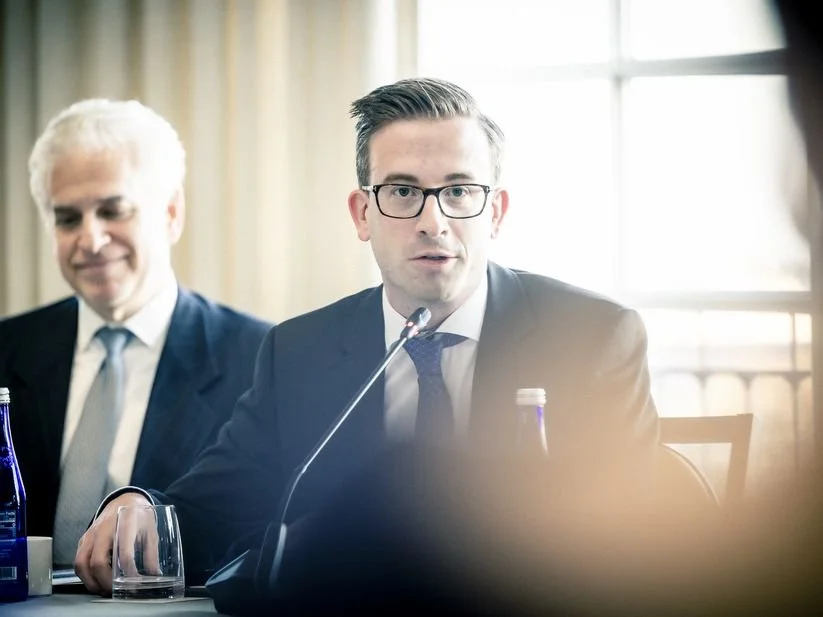
1. Dr. Lorenz Meier — Auterion
If there is one Swiss founder whose name the defence world knows right now, it is Lorenz Meier. His Zurich-born company Auterion has become what some call the "Android for military drones" — an open-platform operating system that allows fleets of drones from different manufacturers to act as a single, AI-coordinated force.
The numbers tell the story: in September 2025, Auterion raised $130 million in a Series B round led by Bessemer Venture Partners, valuing the company at over $600 million.
Under a $50 million Pentagon contract, Auterion is delivering 33,000 AI-powered "strike kits" to Ukrainian forces — the largest autonomous technology deployment in the Western world to date. Meier's technology is already in active combat zones.
His roots are deeply Swiss.
Meier built the original PX4 autopilot software during his master's degree at ETH Zurich, creating what became the global open-source standard for drone navigation. He co-founded Auterion in Zurich in 2017 before relocating headquarters to Arlington, Virginia — a move many in Switzerland quietly regret.
Why he matters: Meier represents the new archetype of Swiss defence founder — not a hardware contractor, but a software-defined warfare architect. His Nemyx swarm strike engine, launched in late 2025, may be the most strategically significant Swiss-born technology of this decade.
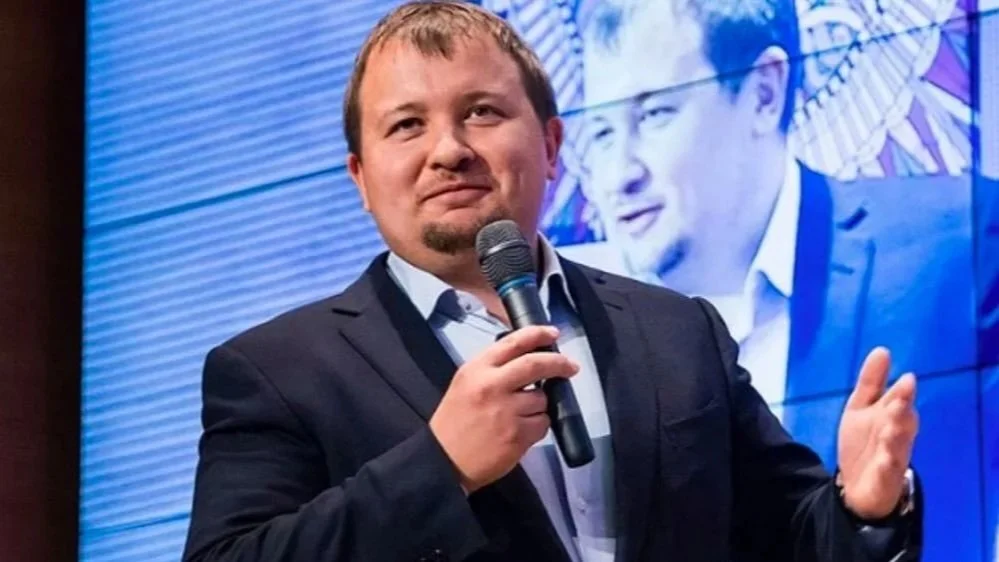
2. Mikhail Kokorich — Destinus
Mikhail Kokorich's biography reads like a geopolitical thriller.
Born in Siberia, he built Russia's first private space company, fell out with the Kremlin, fled to the United States, and eventually landed at the Payerne airfield in the Swiss canton of Vaud — where he founded Destinus in 2021.
His original vision was hypersonic hydrogen-powered aircraft for commercial cargo.
The war in Ukraine changed everything.
By 2023, Destinus was secretly supplying hundreds of military drones to Ukrainian forces, assembled in undisclosed locations from components manufactured outside Switzerland to comply with Swiss export controls. He later renounced his Russian citizenship entirely.
In August 2025, Destinus made its most significant move yet: acquiring Zurich-based AI aviation firm Daedalean for CHF 180 million (approximately $225 million), combining Destinus's drone hardware with Daedalean's certified AI for GPS-denied navigation — a critical capability in modern electronic warfare environments.
Destinus has raised over €200 million in total funding, and Kokorich is now targeting a CHF 1 billion valuation.
Why he matters: Kokorich is building a fully vertically integrated European defence tech company — from propulsion to AI autonomy — at a pace that most established contractors cannot match. He is one of the most consequential founders operating out of Switzerland today.
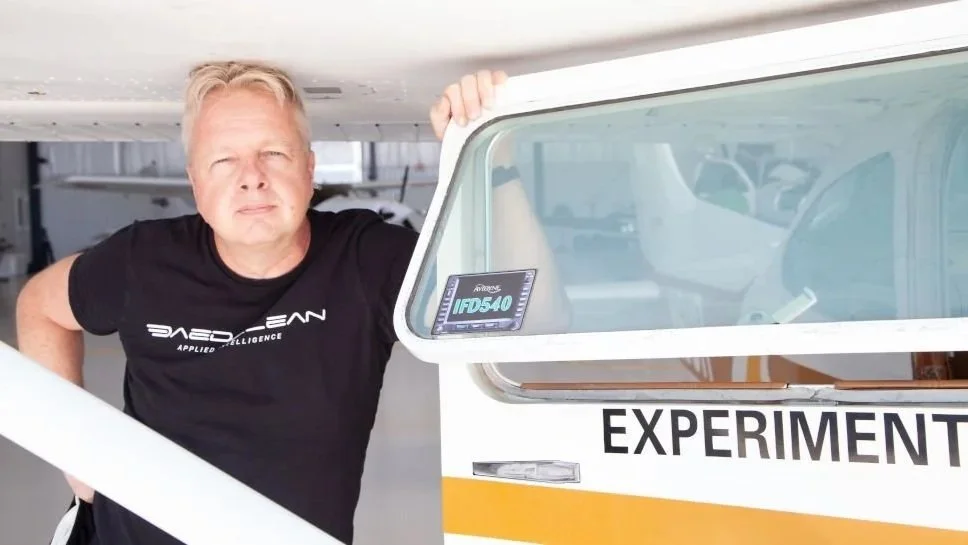
3. Dr. Luuk van Dijk — Daedalean
Luuk van Dijk spent years at Google and SpaceX before co-founding Daedalean in Zurich in 2016 with a deceptively quiet mission: to build AI-based avionics systems that aviation regulators would actually certify.
The company he built did exactly that.
The co-founder alongside Anna Chernova — herself a trained helicopter pilot whose observations about AI-assisted piloting first inspired the venture — van Dijk and his team of over 150 engineers, including 15 PhDs and 19 pilots, developed machine-learning navigation systems capable of operating in GPS-denied environments.
They ran joint research programmes with both the FAA and EASA, becoming the first company to certify AI-based systems for civil aviation.
That work attracted a strategic acquirer. In January 2026, Destinus completed its CHF 180 million acquisition of Daedalean.
Van Dijk transitions to Executive Chairman, with Daedalean now operating as Destinus's core AI engineering hub, focused on navigation for contested environments and seeker technologies for interceptors and cruise missiles.
Why he matters: Van Dijk quietly built the most rigorous AI certification capability in European aviation — and then watched it become the foundation of a military drone programme. His story is a masterclass in how deep technical credibility, patiently built, becomes a strategic asset in times of geopolitical urgency.
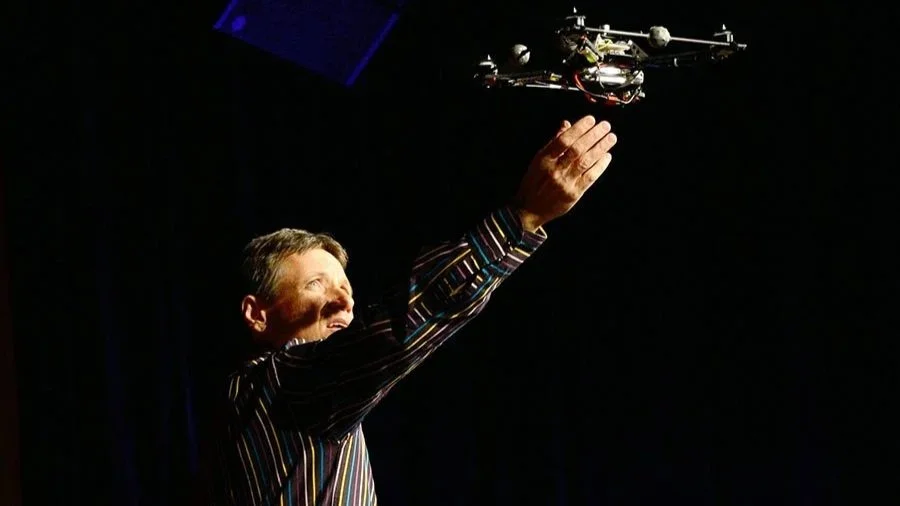
4. Raffaello D'Andrea — Verity
It would be easy to overlook Raffaello D'Andrea on a list of defence founders — his Zurich-based company Verity is best known for the drone light shows it has produced for Metallica, Celine Dion, and Eurovision 2025. But beneath the spectacle is something far more significant.
D'Andrea is a professor of dynamic systems and control at ETH Zurich and a co-founder of Kiva Systems, the warehouse robotics company acquired by Amazon in 2012 for $775 million (and now operating as Amazon Robotics).
His work at ETH pioneered GPS-free autonomous indoor navigation — the ability for drones to operate in fully enclosed, signal-denied environments using onboard sensors alone.
Verity's systems are now deployed at nearly 200 industrial sites globally, including IKEA and Maersk, operating continuously without human intervention.
The underlying technology — swarm coordination, ultra-reliable autonomous operation, GPS-independent navigation — is directly applicable to the kind of contested, GPS-jammed environments that define modern battlefield drone use.
Why he matters: D'Andrea may not describe himself as a defence founder, but the Swiss military and allied governments are paying close attention to his work. In an era where GPS jamming is standard practice, his GPS-denied autonomous systems represent frontier technology — and his ETH pedigree means the pipeline of talent flowing from his lab is formidable.
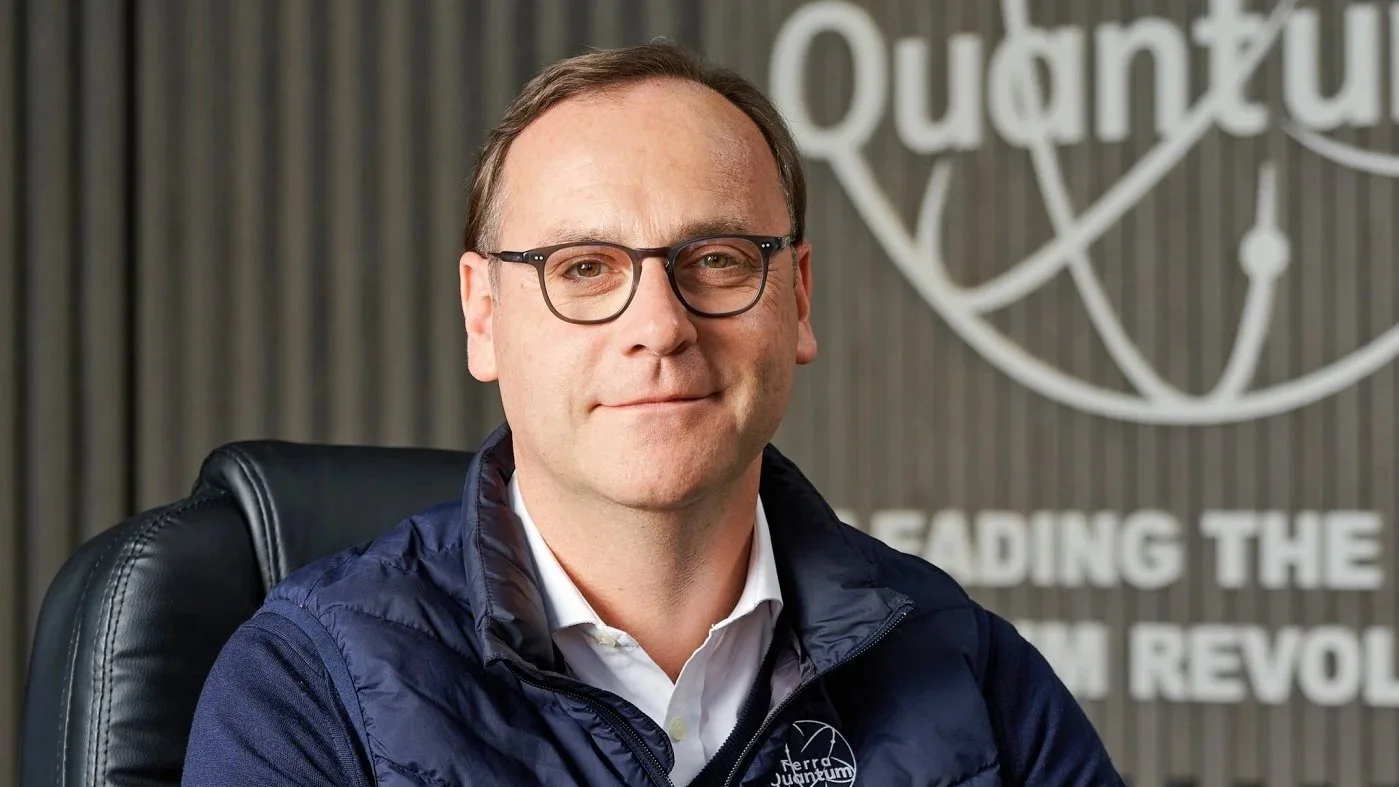
5. Markus Pflitsch — Terra Quantum
While the drone founders attract the headlines, Markus Pflitsch is working on what may be the most strategically important dimension of modern defence: the quantum encryption of communications. His company Terra Quantum, headquartered in St. Gallen, is one of Europe's leading quantum technology firms.
Pflitsch, a former CFO at the Kathrein Group and a CERN-trained quantum physicist, founded Terra Quantum in 2019 with a clear thesis: quantum computers will eventually break every conventional encryption standard — and the window to prepare is closing faster than most governments appreciate. He calls this "Q-Day" and warns it is a matter of national security, not just a technical challenge.
Terra Quantum has already demonstrated quantum key distribution over a record 1,707 kilometres of fibre — a world record. In August 2024, the company won competitive SBIR funding from the US Department of the Air Force to study quantum-resistant networks for military communications.
His clients span automotive, energy, finance, and increasingly defence — any institution whose communications or infrastructure must remain secure in a post-quantum world.
Why he matters: As geopolitical rivals accelerate their quantum computing programmes, the ability to communicate securely — across battlefield networks, intelligence agencies, and financial systems — is no longer theoretical. Pflitsch is building the infrastructure that sovereign nations will need to protect themselves. From St. Gallen, quietly, he may be working on the most important problem in defence technology.
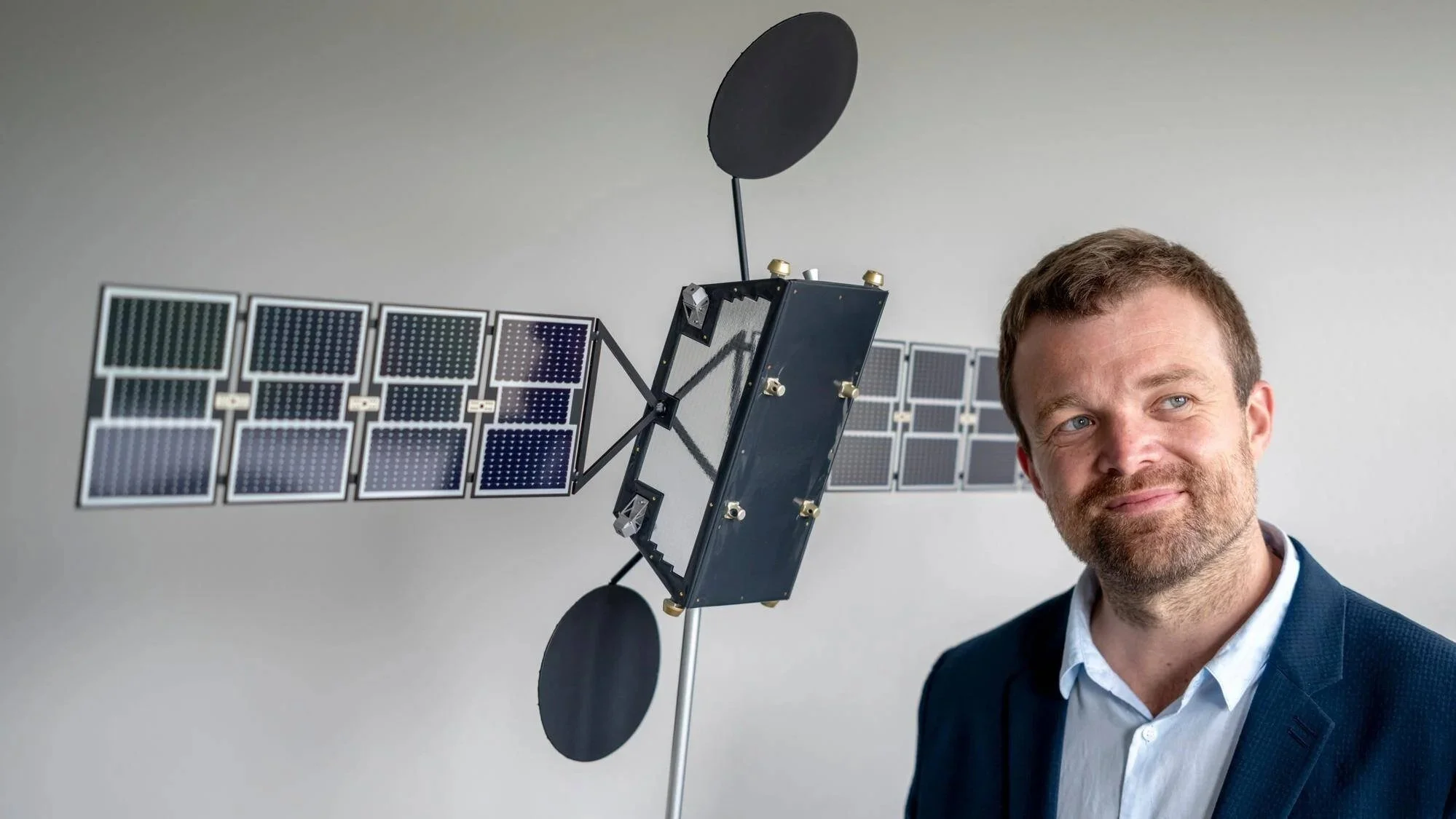
6. Dr. Emile de Rijk — SWISSto12
While drone founders dominate the headlines of European defence tech, the next frontier of military capability is being contested in orbit. And it is here that Dr. Emile de Rijk, the Lausanne-based founder of SWISSto12, is quietly building something that may matter as much as anything else on this list.
De Rijk founded SWISSto12 in 2011 as a spinout from EPFL, where he had developed a breakthrough process for 3D-printing radio frequency components with extraordinary precision — components that are the heart of every communications satellite.
The company has since become Europe's fastest-growing satellite manufacturer, with over €350 million in customer orders, and is now developing HummingSat: the world's first commercial small satellite designed for geostationary orbit.
The defence angle has never been more direct.
As of January 1, 2026, Switzerland formally established its Space Competence Center — a military unit with 222 personnel and a mandate backed by CHF 850 million in funding through the 2030s. The Swiss army's explicit goal: reduce complete dependence on foreign satellite providers for communications, reconnaissance, and navigation. SWISSto12 is named as one of the key Swiss companies the army intends to work with to build and operate the 10 to 15 satellites at the core of this programme.
The timing is no accident.
The war in Ukraine proved definitively that satellite communications, GPS-denied navigation, and space-based reconnaissance are no longer optional for a modern military — they are the backbone of operational capability. Switzerland, currently entirely dependent on foreign providers, has drawn exactly that lesson.
Why he matters: De Rijk has spent fifteen years building the precision manufacturing infrastructure that Switzerland now urgently needs for sovereign military space capability.
As Europe races to reduce dependence on US satellite systems and launch infrastructure, his company sits at the intersection of the continent's most strategically sensitive ambitions — built, characteristically, in a quiet EPFL lab in Lausanne.
Switzerland's defence startup ecosystem is still small by global standards.
But the founders on this list are building technologies that NATO governments, the Pentagon, and European defence ministries are actively seeking.
In a world that is re-arming rapidly, Switzerland's deep tech infrastructure — ETH Zurich, EPFL, the Cyber-Defence Campus, and a culture of precision engineering — is proving to be a quiet but powerful generator of the next wave of defence innovation.