8 Elite Swiss Schools for UHNWIs
One of the foundations of Switzerland’s success is generational wealth.
Father, daughter, son, grandchildren - each new generation has its role to play. And education has a role to play as well.
For that, Switzerland has a lot to offer in the way of elite education.
Switzerland's boarding schools are not merely institutions of learning — they are forges of dynasty, quiet meeting places of future heads of state, heirs to industrial fortunes, and the children of those for whom only the finest will do.
Here is an guide to eight of the most significant - and the most sought-after among UNWHI families.
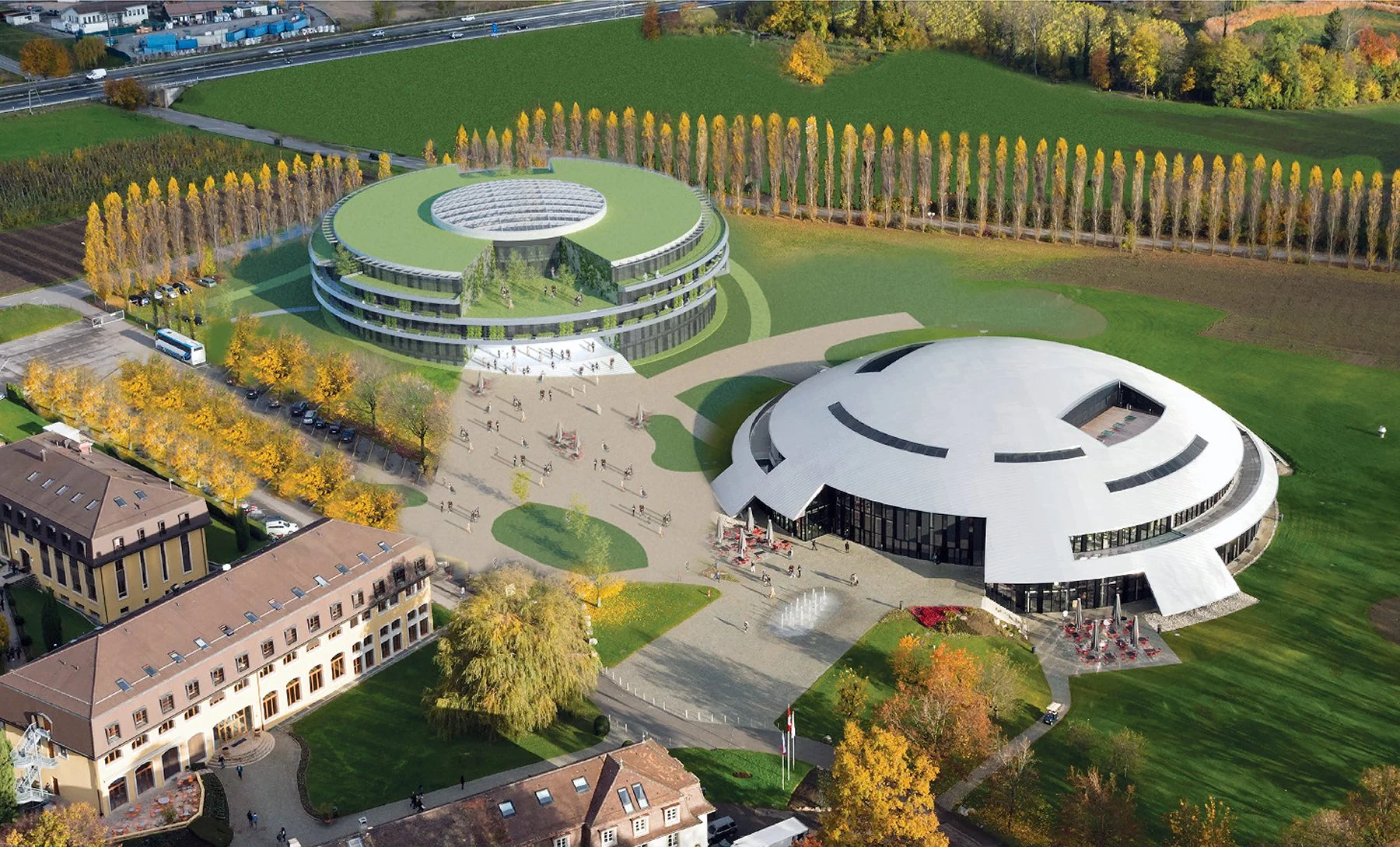
Institut Le Rosey - the school of kings and queens
Institut Le Rosey — Rolle & Gstaad
No other school on earth carries quite the mythology of Le Rosey.
Founded in 1880 by Paul-Émile Carnal on the grounds of a 14th-century château perched above Lake Geneva, it earned the sobriquet "the School of Kings" not as a marketing device but as a straightforward description.
King Albert II of Belgium, King Fuad II of Egypt, King Juan Carlos I of Spain, Prince Rainier III of Monaco, the Shah of Iran, the Aga Khan IV, the Duke of Kent — the roll call of monarchs alone would fill a diplomatic guest list.
Beyond royalty, Le Rosey has shaped generations of Hohenzollern, Rothschild, and Rockefeller heirs, alongside figures as varied as CIA Director Richard Helms, heiress Tatiana Santo Domingo, and Julian Casablancas of The Strokes.
What sets Le Rosey apart in a purely operational sense is something no other school in the world has ever managed: it moves.
Each January, the entire school — students, faculty, staff, and administration — decamps from the 28-hectare Rolle campus on Lake Geneva to a winter campus in the ski resort of Gstaad, where it remains until March.
This tradition began in 1917, initially as a way to escape the dense fog that settles over the lake in winter, and it has since become the school's defining eccentricity and one of its greatest draws.
The Rolle campus itself is exceptional: two swimming pools, ten clay tennis courts, a sailing centre on the lake, an equestrian centre, and a concert hall — constructed at a reported cost of £40 million — that has hosted the Royal Philharmonic Orchestra.
Academically, Le Rosey offers a rigorous bilingual French-English education alongside both the International Baccalaureate and the French Baccalaureate, with students drawn from approximately 70 nationalities.
Annual boarding fees run between $130,000 and $150,000 USD. Admission is famously selective and based solely on merit — the school accepts no donations and maintains no donor-influence pathway, a policy that has the dual effect of preserving standards and ensuring that the alumni network, known as the AIAR, remains genuinely exclusive.
Upon graduation, every Roséen receives access to a private portal with the contact details of all living alumni across the world — a network, as one former student put it, that money ordinarily cannot buy.
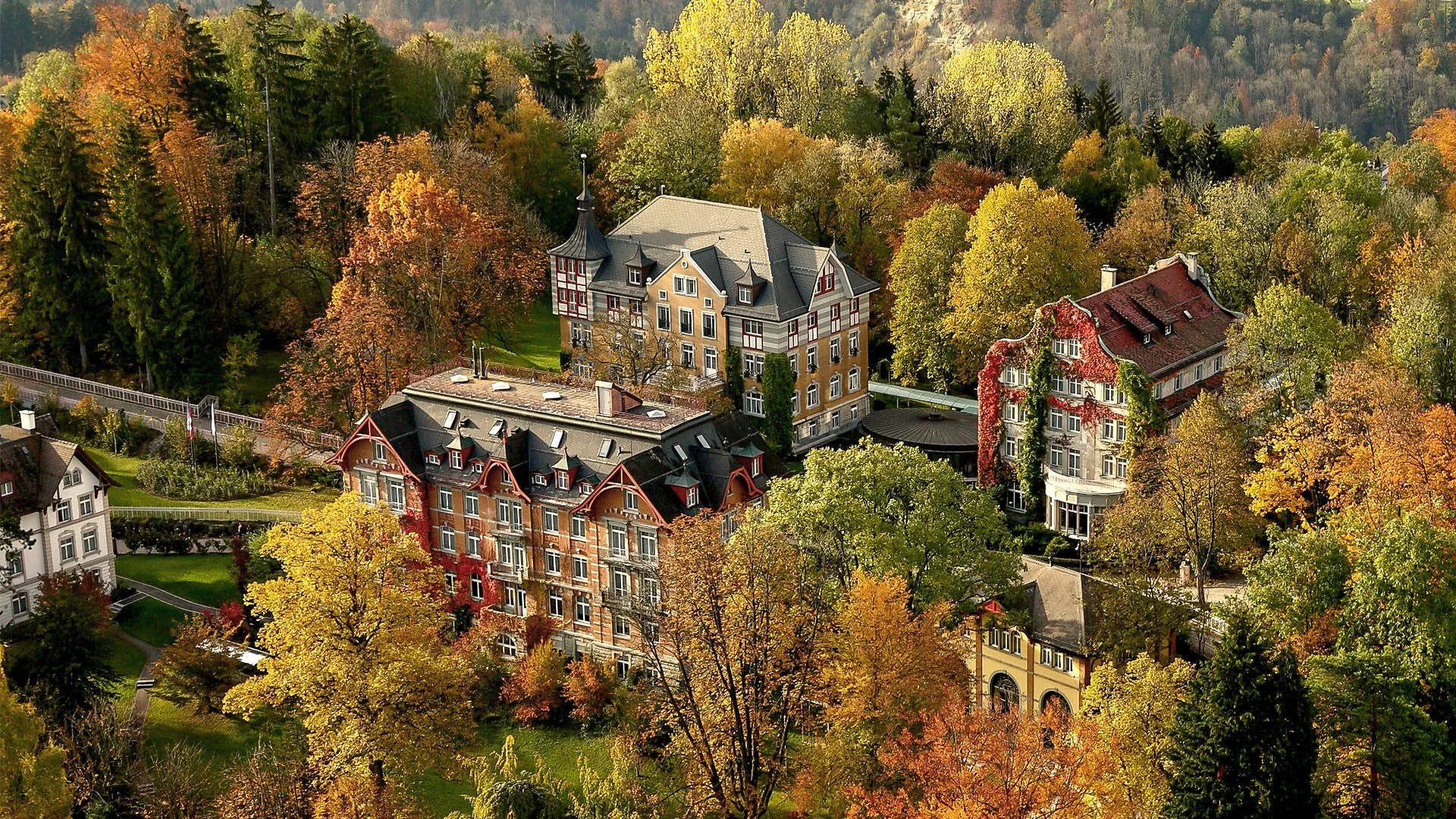
Institut auf dem Rosenberg - Davos for children
Institut auf dem Rosenberg — St. Gallen
If Le Rosey is the School of Kings, Rosenberg has laid claim to being the school of the future — while also holding the title of the most expensive school in the world.
Founded in 1889 by Ulrich Schmidt in the German-speaking city of St. Gallen, near Lake Constance and the Alpstein mountains, Rosenberg has evolved from a traditional Swiss boarding school into something closer to a bespoke educational atelier.
Its own branding — "The Artisans of Education" — is not entirely immodest.
The school's 25-hectare campus, set across 14 restored art nouveau villas in 100,000 square metres of private parkland, houses roughly 280 students from 60 nationalities — a deliberately limited enrolment that enforces an almost residential-hotel-level of individual attention.
The staff-to-student ratio stands at 1:2 across all staff, and 1:3 for teaching faculty. Rosenberg's headmaster has been candid that the school serves families with entrepreneurial backgrounds who intend their children to assume leadership roles — whether in a family business, finance, philanthropy, or the arts.
Accordingly, the curriculum goes well beyond standard academics: students can pursue courses in wealth creation and investment, international law, product and fashion design, robotics, AI, architecture, and hotel management, many taught in partnership with institutions including ETH Zurich, the Norman Foster Foundation, ABB, and the University of St. Gallen.
The school also maintains a private alpine club, a polo school, and a riding arena.
The financial commitment is unambiguous.
As of 2025, the base academic fee stands at CHF 93,000, with additional housing, extracurricular, and personal expenses averaging a further CHF 57,000 — bringing the all-in annual cost to approximately $175,000 USD, the highest of any school on earth.
Rosenberg accepts no external funding or donations, admitting students through an intensive test process rather than connections or gifts.
It was named the world's Best Boarding School in 2024 by Premium Switzerland and consistently features among the top ten international schools in Switzerland.
It has been described, with some accuracy, as "Davos for children."
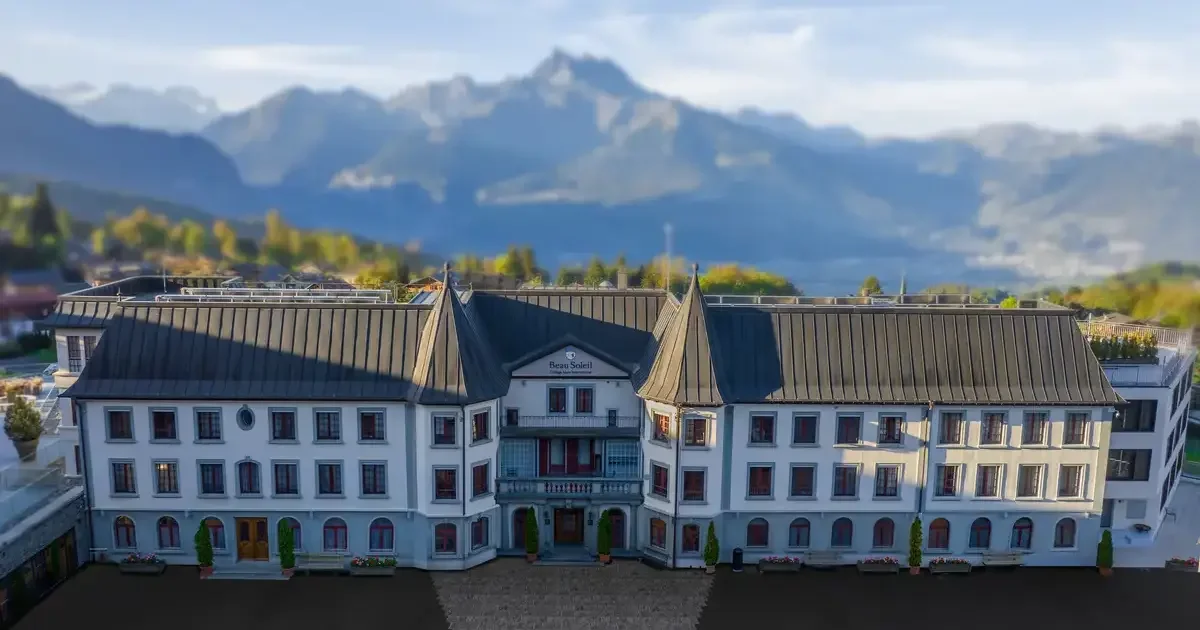
Collège Alpin International Beau Soleil - reaching high
Collège Alpin International Beau Soleil — Villars-sur-Ollon
Perched at 1,350 metres in the Swiss Alps above the Rhône Valley and with Mont Blanc visible on the southern horizon, Beau Soleil offers perhaps the most cinematically alpine of all Swiss boarding school settings.
Founded in 1910 by Madame Bluette Ferrier in Villars-sur-Ollon — where the generous southern exposure and the softening influence of Lake Geneva conspire to produce one of Switzerland's sunniest microclimates — the school has been educating students aged 11 to 18 for over a century and a quarter.
The Daily Telegraph has listed it as one of the most exclusive schools in the world.
What Beau Soleil has built, across more than 110 years, is a reputation for producing genuinely well-rounded graduates through what it calls holistic education — a phrase that here has real meaning rather than mere marketing.
Outdoor pursuits are not optional enrichment but structural to the programme: students ski weekly in winter across disciplines from downhill racing to ski mountaineering, and the school stages seven signature challenges per year, including night-time mountain summits and 20-kilometre runs.
In 2005, to mark its 95th anniversary, ninety students, alumni, and teachers climbed Kilimanjaro — a school expedition that the school claims as a world first for an educational institution. Notable alumni include French actress and singer Charlotte Gainsbourg.
The school's approximately 300 students come from more than 50 countries and may pursue either the International Baccalaureate or the French Baccalaureate — or the IGCSE as a precursor — in either English or French.
In 2011, Beau Soleil joined Nord Anglia Education, a global network of 68 premium international schools, bringing with it access to institutional partnerships including with The Juilliard School, MIT, and UNICEF.
Annual boarding fees sit at approximately CHF 122,000–143,000, varying by age group.
The campus comprises seven buildings, including dedicated arts and science facilities, an outdoor heated pool, tennis courts, and ski-in access from the surrounding slopes.
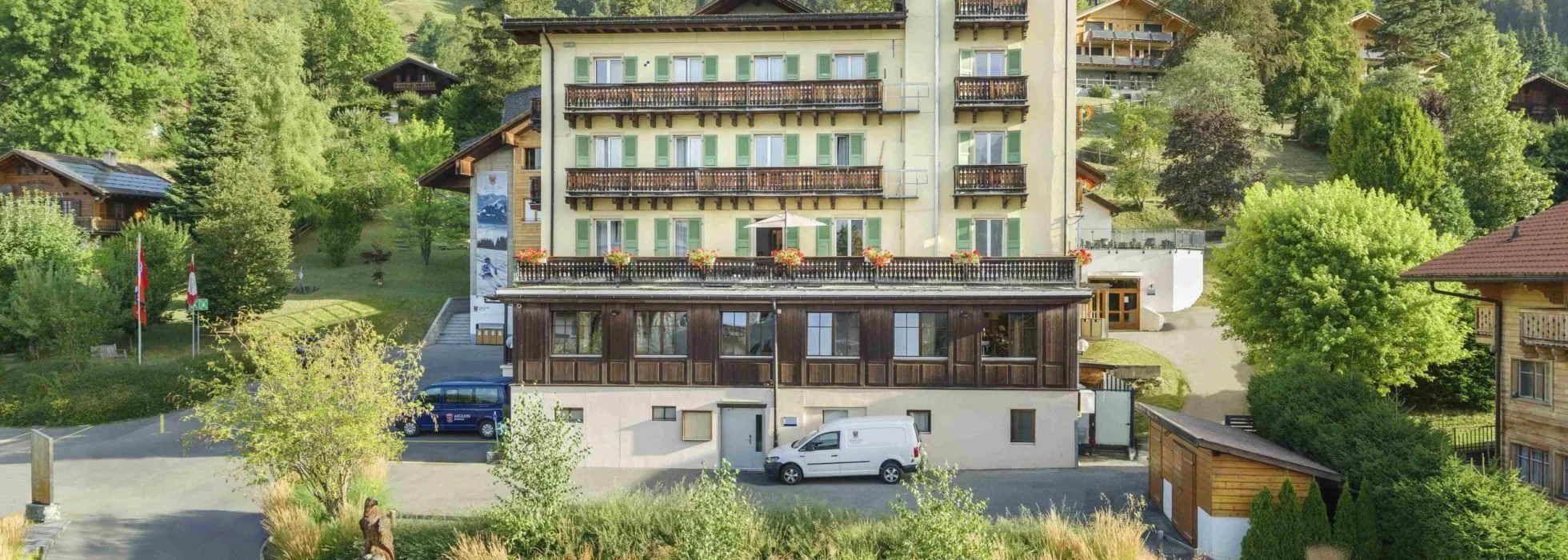
Aiglon College - Scottish roots
Aiglon College — Chesières-Villars-sur-Ollon
Where Beau Soleil emphasises alpine beauty and holistic breadth, Aiglon College was built on a distinctly more demanding premise.
Founded in 1949 by John Corlette — a former master at Gordonstoun, the famously austere Scottish school — Aiglon opened with just six pupils and a philosophy drawn from Gordonstoun's founder Kurt Hahn: that resilience, self-reliance, and moral courage are not extracurricular virtues but the very point of education. The school operates as a not-for-profit institution, a distinction that matters in shaping its culture.
Aiglon's campus sits at 1,227 metres in the alpine village of Chesières, just above the ski resort of Villars-sur-Ollon — a short distance from Beau Soleil but occupying a different philosophical universe.
The school's expedition programme is not merely encouraged but mandatory: students regularly undertake hiking, ski mountaineering, kayaking, rock climbing, camping, and peak summits as part of the formal curriculum. Morning meditation is part of the timetable.
The school's traditions — including a rank system that rewards merit across academic and personal achievement alike — reflect its founder's conviction that character, not comfort, is the proper product of a good school.
A 1995 Newsweek profile noted, with approval, that Aiglon's high fees did not "buy luxury," and that wealthy parents specifically chose the school because they did not want their children living in excessive comfort. The working day is structured across six days per week.
Today, Aiglon enrolls approximately 480 students aged 7 to 18 from over 65 nationalities and prepares senior students for IGCSE and the IB Diploma, in which the Class of 2025 achieved a cohort average of 36.3 and a 100% pass rate.
Fees range from CHF 47,850 to CHF 159,000 annually. The school offers a small number of fully funded scholarships each year — a reflection of its founding as a genuine educational mission rather than purely a luxury service.
Graduates consistently win places at top universities in the UK, USA, and worldwide, with the mountain, as the school puts it, having forged their character before the university interview ever takes place.
Leysin American School - mountain education
Leysin American School — Leysin
Leysin's history adds a layer of texture to any school based there.
In the early 20th century, the alpine village was one of Europe's leading tuberculosis treatment destinations — its clean air and extraordinary sunshine drew the desperate and the famous in equal measure.
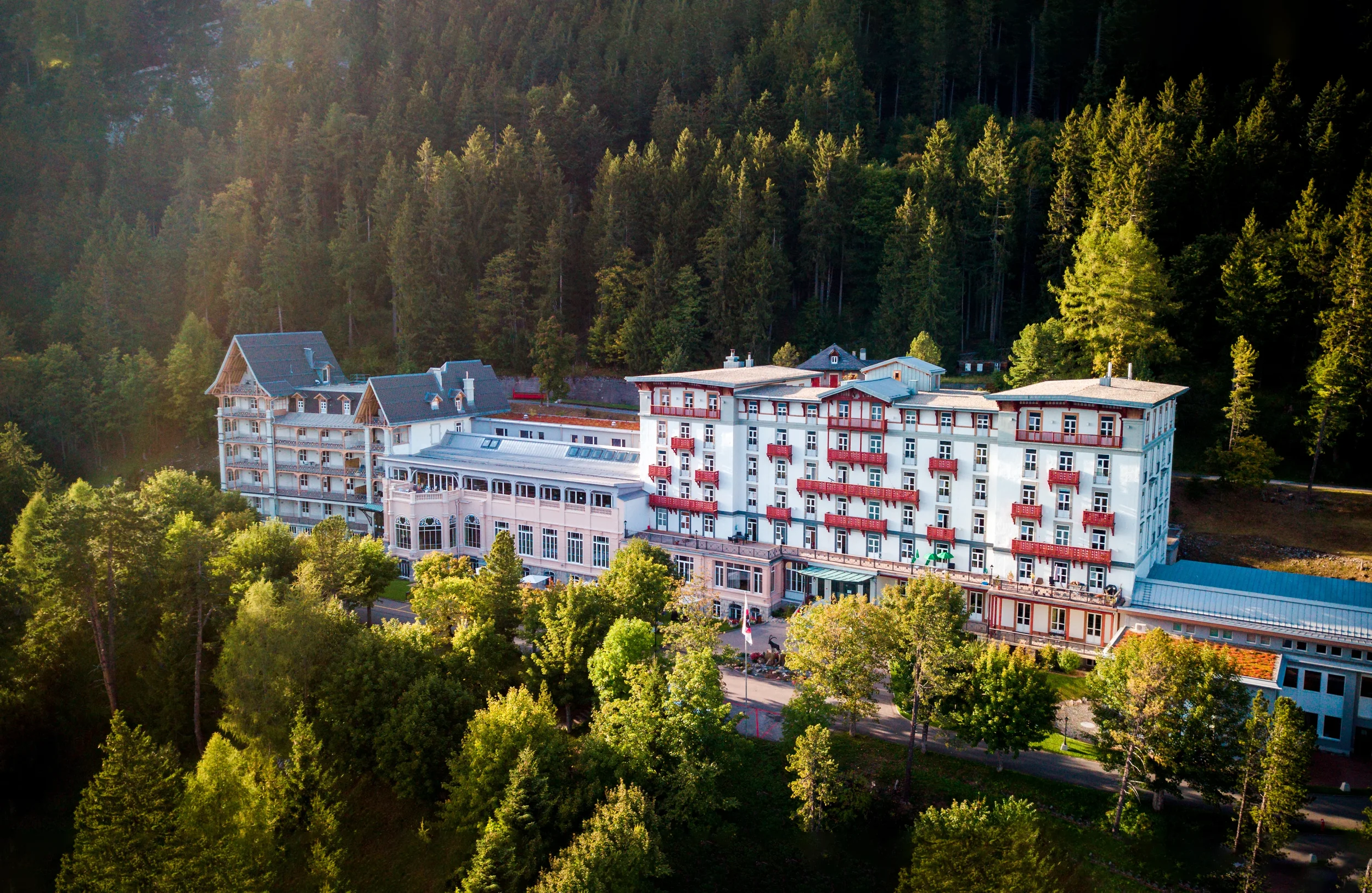
Czar Nicholas II came in 1904; Igor Stravinsky, whose wife was a patient at the Grand Hotel, composed The Rite of Spring during his visits in 1911. By the 1960s, the sanatoria had been repurposed, and Fred and Sigrid Ott opened Leysin American School in 1961 with 89 students and 12 teachers, inspired by a post-war vision of uniting young people across cultures. The original Grand Hotel — a Belle Époque structure built in 1892 — was eventually renovated and now serves as the school's IB campus.
The Ott family has run the school for three generations, a continuity that gives LAS a warmth and coherence unusual among international institutions of its type.
That family stewardship has produced a number of genuine firsts: LAS was the first Swiss international boarding school accredited by the European Council of International Schools, and the first boarding school in Switzerland to introduce the International Baccalaureate programme.
It was also the first school in the world to receive ISO 9001 certification — a quality management standard more typically associated with manufacturing than education.
Today, approximately 300 students from over 60 nationalities attend, with annual boarding fees of approximately CHF 120,000–128,000.
Students may choose among the International Baccalaureate, Advanced Placement, or US High School Diploma pathways, and the school notes that 90% of graduates receive offers from at least one of their top-choice universities.
The campus sits 90 minutes from Geneva and was one of the host venues for the 2020 Winter Youth Olympic Games — a reflection of the town's continuing status as a serious alpine destination.
The broader alumni network extends to over 8,000 former students worldwide, drawn from many of the world's most prominent families.
Collège du Léman - modern and open
Collège du Léman — Versoix, Geneva
Of all the schools here, Collège du Léman is the one most firmly planted in the orbit of international Geneva — a city that hosts the United Nations, the Red Cross, the WTO, and the headquarters of dozens of multinational corporations and private banks.
The school was founded in 1960 by Francis and Inge Clivaz, two Swiss educators who looked at a city rapidly filling with international executives and diplomats and saw the need for a school that could genuinely serve a multilingual, multinational family.
The founding mission statement was characteristically direct: to teach "in a spirit of openness and tolerance so that its students become citizens and leaders of a world respectful of differences."
Today, Collège du Léman is among the largest schools on this list — home to over 1,800 students, including roughly 250 boarders, drawn from more than 120 nationalities.
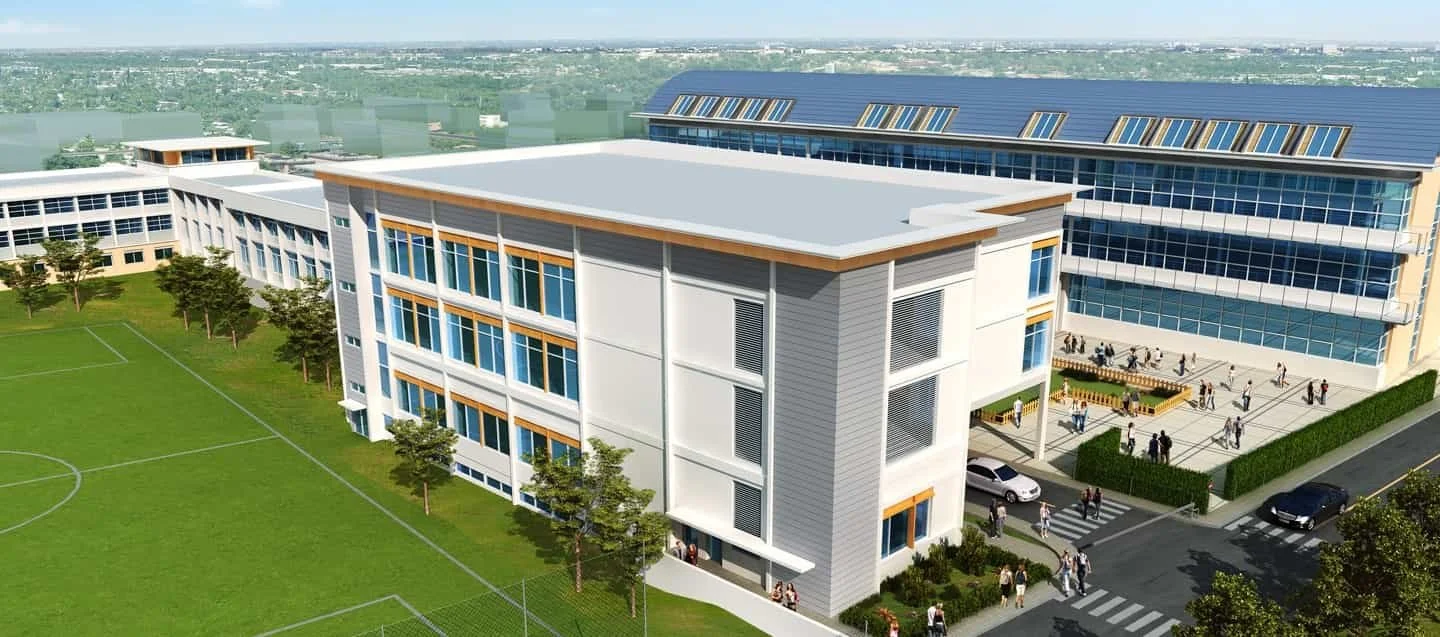
That scale, unusual in Swiss private education, is a function of its dual identity as both a day school for Geneva-based families and a boarding option for those from further afield. The green, village-like campus occupies 50 acres on the right bank of Lake Geneva in Versoix, positioned between the city and the countryside.
In 2015, CDL joined Nord Anglia Education, and the school has since developed formal collaborations with The Juilliard School for performing arts, MIT for STEM innovation, and UNICEF for global citizenship initiatives — partnerships that give students access to intellectual resources well beyond the campus itself.
The breadth of the curriculum is genuinely unusual: students can pursue the IB Diploma, American High School Diploma, French Baccalaureate, Swiss Maturité, or IGCSE, in English, French, or a bilingual combination, with the ability to switch tracks year to year.
Over the past three years, the school has maintained a 99% pass rate across all five diploma programmes. More than 100 extracurricular activities are on offer, and graduates regularly enter the Ivy League, Oxbridge, EPFL, and the École Hôtelière de Lausanne.
For UHNWI families with a permanent Geneva base — or those whose work within the international diplomatic and financial ecosystem makes proximity to the city a priority — CDL represents the most natural fit.
TASIS - a tropical elite
TASIS, The American School in Switzerland — Lugano
TASIS occupies a singular historical position among American international schools: it was the first American boarding school ever established in Europe.
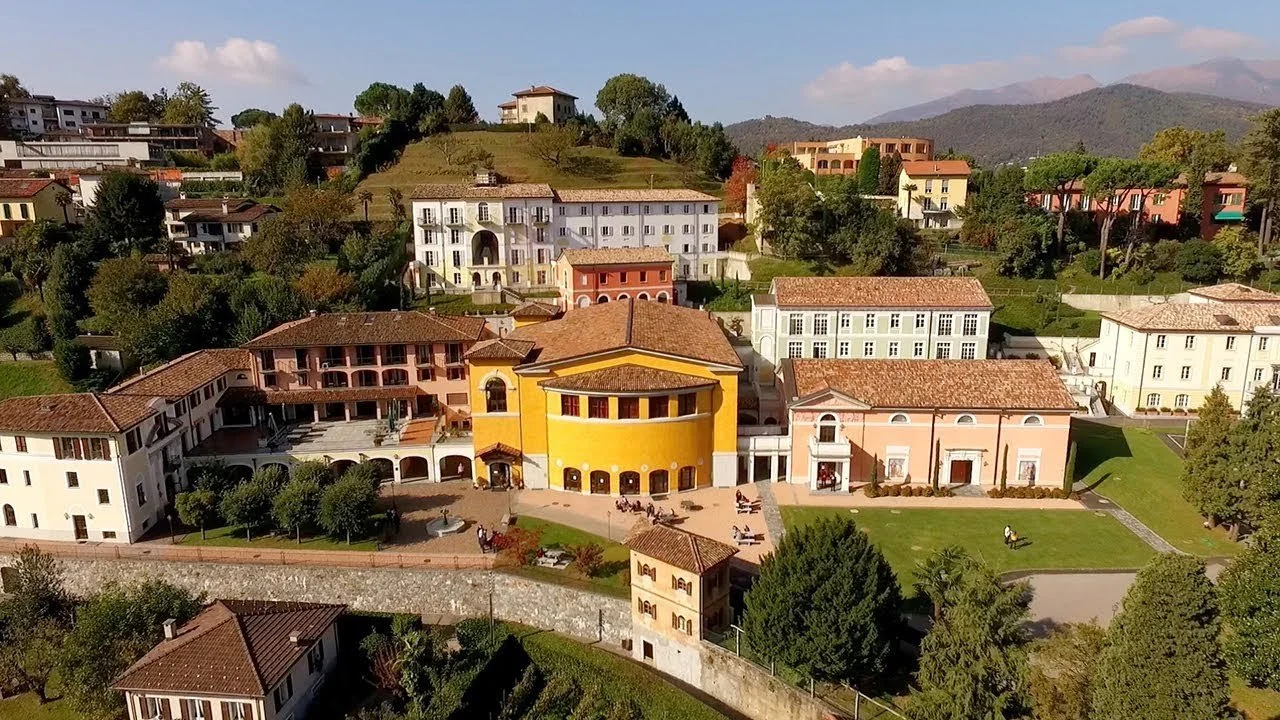
Founded in 1956 by M. Crist Fleming — born Mary Crist Welch in Boston in 1910 — TASIS began as an experiment in transplanting the model of the American independent preparatory school to the continent, initially operating in Locarno before securing its permanent home at the 17th-century Villa de Nobili in Montagnola, on the Collina d'Oro — the "Hill of Gold" — above Lugano.
Fleming directed the school for more than five decades, until her death in 2009 at the age of 99, and the institution remains under family oversight to this day through the TASIS Foundation.
The Italian-speaking canton of Ticino gives TASIS a character unlike any other school on this list: Mediterranean in light and architecture, with palm trees and lake views that feel more Como than Zermatt, yet firmly Swiss in rigour and stability.
The campus, now comprising more than 25 buildings, blends 17th-century villas with the state-of-the-art Campo Science Center and the Şahenk Fine Arts Center — funded by alumnus Ferit Şahenk, chairman of the Turkish conglomerate Doğuş Group, who graduated in 1983.
Other notable alumni include actor Billy Zane (class of 1984) and prominent American attorney Laura Wasser. The school enrolls approximately 740 students from pre-kindergarten through postgraduate level, representing nearly 60 nationalities, with around 260 of them resident boarders.
TASIS places unusual formal emphasis on travel and cultural encounter: a mandatory Academic Travel programme takes students to sites across Europe and beyond, framing the continent itself as a classroom.
The school offers both Advanced Placement and the International Baccalaureate at the secondary level, and over 70% of faculty hold advanced degrees.
Annual boarding fees sit at approximately $105,000 USD.
Its performing arts programme — built on the rich cultural resources of the Italian region — is consistently cited by alumni as among the most distinctive aspects of life at the school, and the summer programme in Lugano draws students from across the world each year.
For families seeking a firmly American educational framework within a uniquely European — and specifically Italianate — context, TASIS remains without peer.
International School Altdorf - a school apart
International School Altdorf — Altdorf, Uri
For families seeking something genuinely different from the established Swiss boarding school circuit, International School Altdorf occupies a category of its own — not by lineage or mythology, but by location, intimacy, and deliberate contrast.
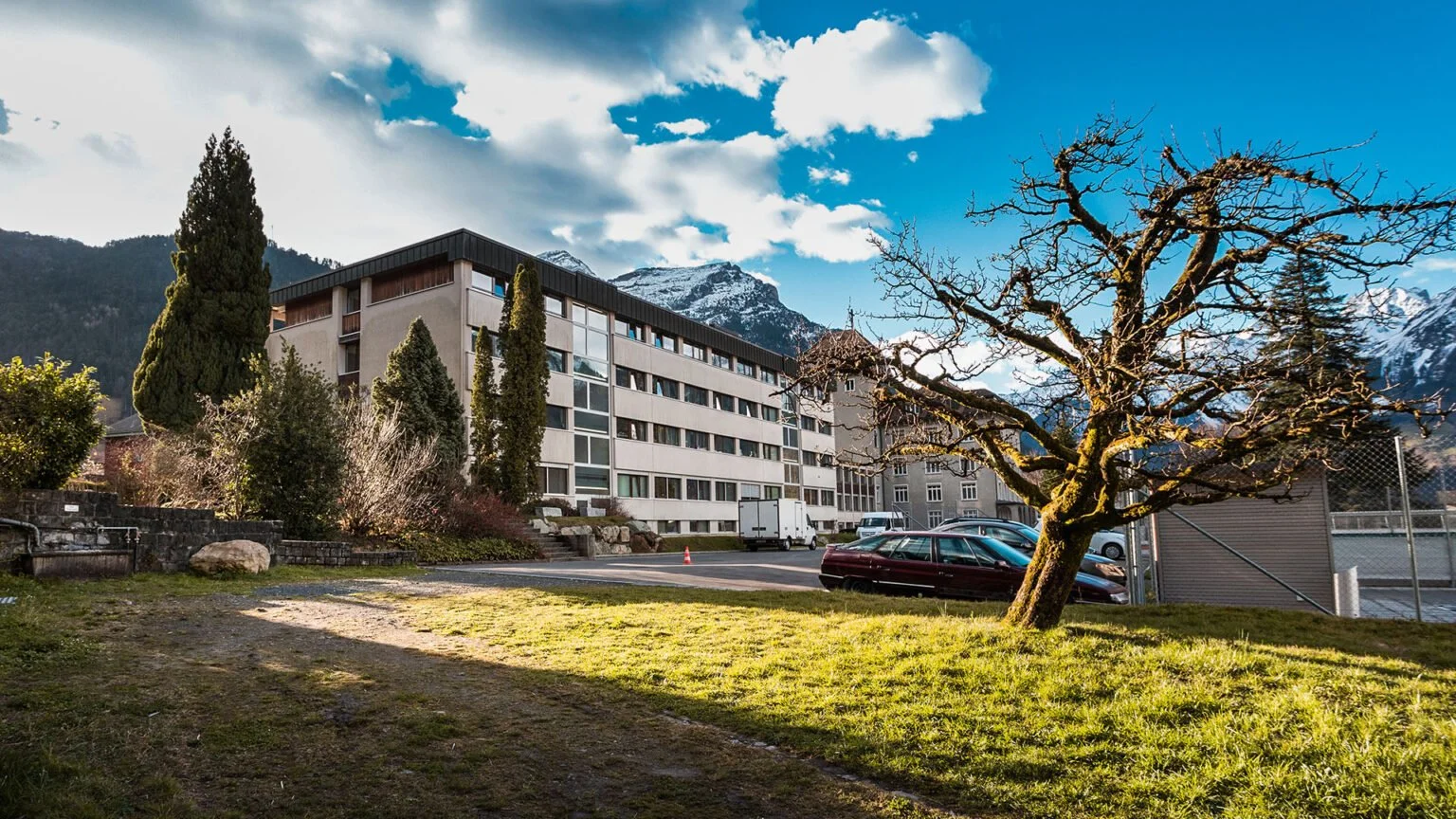
The school sits in the town of Altdorf, the historic capital of Canton Uri at the southern tip of Lake Lucerne, ringed by some of the most dramatic mountain scenery in all of Switzerland.
Uri is, by Swiss standards, a place of foundational importance: it is where the original three forest cantons swore the oath of confederation in 1291 that gave birth to the Swiss state, and it is the legendary home of William Tell — who, according to tradition, shot the apple from his son's head on the market square that still stands a short walk from the school's campus.
For students accustomed to cosmopolitan cities, arriving in Altdorf is a clarifying experience: they are in the heart of a Switzerland that has changed rather little in temperament or landscape for centuries.
Founded in 2017, ISA is among the newer entrants to Swiss international education, and it wears that relative youth as a strength rather than a limitation.
Named best boarding school in Switzerland 2023, the school was built around a philosophy of radical accessibility and personal attention in an era when many Swiss boarding schools have grown into institutions of considerable scale.
Class sizes range from five to twenty students depending on the programme — a floor of five that many far more expensive schools cannot claim — and every teacher formally mentors a specific cohort of students and is available for individual tutoring beyond school hours.
The school serves students aged 14 to 19 and draws from over 25 nationalities, offering a full range of globally recognised qualifications: the IB Diploma Programme, Cambridge IGCSE, the IB Middle Years Programme, and a Career Academic Programme for students whose ambitions take them toward applied or vocational pathways.
One logistical distinction that will matter to internationally mobile families is that ISA operates both spring and autumn intake, a flexibility that most Swiss boarding schools do not offer and that substantially eases mid-year transitions for families whose lives do not align with September calendars.
The campus, situated at the top of a quiet village quarter with continuous alpine views, contains a science laboratory, library, soccer field, basketball and tennis courts, beach volleyball, an outdoor swimming pool, and — most unexpectedly — a student-run animal shelter housing ponies, rabbits, chickens, and goats.
Students manage the shelter themselves, a responsibility the school treats as a meaningful dimension of pastoral development rather than a novelty.
Beyond campus, the natural setting provides immediate access to hiking, rowing on Lake Lucerne, mountain biking, and skiing in winter.
In recent years, ISA students have competed in the European Youth Parliament at both regional and international sessions — including the 103rd International Session in Málaga, where an ISA student was selected as one of only five Swiss national delegates — and the school hosts a University Fair annually that draws representatives from approximately 70 institutions worldwide.
For families who want a bespoke, unhurried Swiss boarding experience embedded in authentic alpine Switzerland, rather than the polished circuits of Lake Geneva or Gstaad, ISA offers a distinctive and quietly compelling alternative.