Alexander Stubb is Europe’s Marketing Genius
You don’t have to be crazy to be a marketing genius.
Turns out you don’t even have to be in marketing at all. You can be president of a country as well.
At this year’s Munich Security Conference, Finland’s Alexander Stubb proved again why he is a winner (as he has done at WEF in the past).
But this time he demonstrated why he is not only a calming influence on European-US relations and a strong representative of the resurgent North, but also a prime example of marketing genius at the highest political level.
And he did it with one essential marketing skill: reframing.
These three examples from Stubb’s Munich conversations highlight the point very precisely.
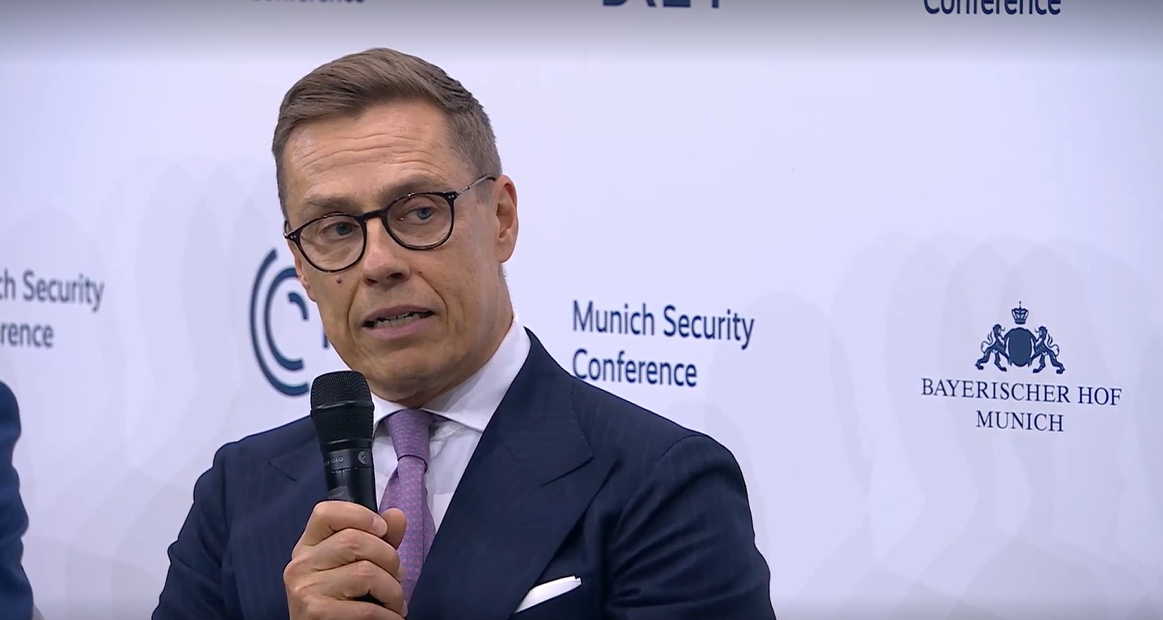
“Everything is falling apart with the USA”
After last year’s tense and controversial conference in Munich, observers watched this year’s edition very closely. Most expected to see more signs of a crumbling transatlantic alliance. Despite the glowing words coming from Secretary Rubio, the general consensus pointed to a slow-burning crisis.
But when Stubb sat down with The Economist, he changed the picture. Crucially, he was careful not to deny that the US-European relationship was different than before.
But he took the harshly negative framing of an “overbearing, transactional” relationship under Trump and set it in a new light. Yes, priorities change. But hard-core interests do not. And instead of focusing on the change in tone from Trump and co, Stubb ticked off the areas where US and European interests are still aligned - from military, to Arctic security and beyond.
By washing away any idealism and reframing the current situation in practical terms from the perspective of the United States itself, Stubb was able to change the picture from one of utter hopelessness to one of pragmatic calm.
“Europe is dead”
In the eyes of the far-right, both in Europe and the US, Europe is a dead brand.
Mass immigration, socialist welfare policies and over-regulation all make living in Europe totally unbearable. That is the story, at least.
Stubb wasn’t having any of it.
Speaking on the panel: **On Par? Fortifying the Foundation of Transatlantic Security,** together with Mette Fredrickson, Prime Minister of Denmark, Pedro Sánchez, Prime Minister of Spain as well as US Senator Chris Coons, Stubb turned the tables on the “down-and-out” narrative.
He zeroed in on the logical fallacy of using “crude GDP” as the biggest measure of success. Rather than use a single statistic as a measure, Stubb hammered home on the undisputable leadership of Nordic countries in the rankings of happiest countries.
Critics may point out that highlighting the success of Finland, Sweden, Denmark and Norway excludes many other countries that are not quite so happy. But on one particular point, his example hit home: a social welfare state does not have to end up looking like Communist Russia.
In that sense, he blew away the fog of the right’s attacks on Europe and shone line on the true state of affairs. His closing line hit home: “I’m actually bloody happy.”
A brand-building reframe.
“Russia is winning the war.”
But perhaps the biggest reframing - and therefore the biggest marketing succcess - of Stubb’s time in Munich touched on a topic he has often repeated: Russia’s success in the Ukraine war.
Framed against the backdrop of pure military and economic size, Russia may seem to have the upper hand. But Stubb refused to rely on impressions, turning instead to the pure and simple facts as they stand today:
Putin did not capture the country in 5 days as planned
Russia holds only ~12% of Ukrainian land
Russian military progress over the past year has been miniscule
Putin’s army has lost over 1 million soldiers
While it might seem simplistic to resort to facts to reframe a situation when most marketers selectively play on emotions or perspectives to set their stage.
Yet in this case, Stubb is brutally effective.
So what can Europe learn from this marketing masterclass?
The framing - or in a wider sense, the context - of any important topic is fundamental to achieving the outcome you desire. This holds true for every marketer anywhere in the world.
The best in the business know how to using framing in a way that leads to logical conclusions, such as making a purchase or a committment. Without directly attacking or engaging a target, framing and reframing make it possible to develop the right environment such that one conclusion makes perfect sense.
Stubb has skillfully framed the conversation around Europe, Ukraine and Russia in a way that is both logical - i.e. hard to dispute - and emotional, since happiness is a universal desire and anyone who argues against it risks seemingly overly cold and heartless.
Europeans could understandably risk losing heart after vicious attacks by the Trump administration.
They would not be blamed for thinking less of themselves and there for ceasing to believe that they are strong enough without the US. But remembering what makes you happy and what you live for is also a good way to remember what you are willing to die for.